The Ministry of Education is introducing AI literacy as part of the education system. Schools will support not only technological skills, but also students’ critical thinking and mental well-being to help them navigate the challenges of the digital world.
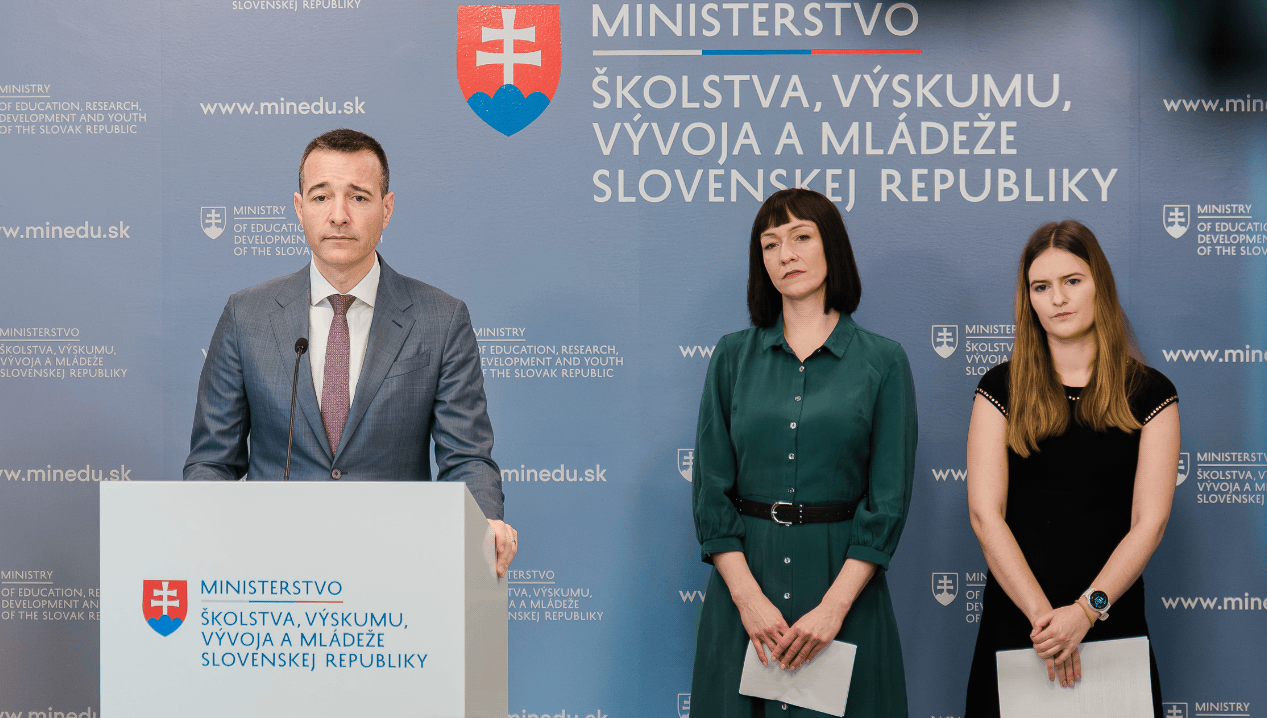
If we do nothing today, in a few years we will not be dealing with technology, but with the consequences of its impact on children. “We will have children who trust a machine more than a friend, sibling, or parent. A generation that begins to form a relationship with something that listens to them but never truly understands them. And that is the moment when it is already too late,” warns Minister of Education Tomáš Drucker.
Putting People First in the Age of AI
The Ministry therefore places emphasis on people, not technology. It monitors how the AI environment shapes young people’s thinking, decision-making, and relationships, and responds with systematic measures.
Children and young people use AI for learning, writing, and searching for information. Increasingly, they also turn to it when dealing with personal questions or emotions. Schools are therefore acting now. If we want young people to remain free, critical, and confident, they must understand the technologies that influence their daily lives.
“That is why today we are not addressing technology. We are addressing the human being – a young person shaped by the environment of artificial intelligence,” the Minister emphasizes.
Pillars of AI Literacy in Education
By introducing AI literacy into primary education from March 2026, Slovakia is taking a major step forward. The Ministry is not following a trend, but building a fundamental competence for life in a digital society.
Schools will guide students to understand how artificial intelligence works, critically evaluate its outputs, and use it safely and responsibly.
Slovakia is also among the first countries to systematically connect AI literacy with mental health. Young people increasingly turn to technology even in situations that require human understanding. Fast responses may create an illusion of a relationship, but technology cannot replace genuine human connection.
Schools will therefore strengthen students’ emotional resilience, teach them to work with emotions, and seek support in real relationships.
New Methodologies to Support Teachers and Students
The Ministry, in cooperation with the organization Emotional Compass, has prepared new methodological materials for schools.
“Teachers and parents face a demanding task: helping children navigate a world where AI is changing how we learn, communicate, and make decisions. That makes it even more important to teach children how to live in this world, understand themselves, and build healthy relationships,” says Lenka Svoradová, Director of Emotional Compass.
The methodologies focus on students aged 11 to 15, a period when young people form their identity and are particularly sensitive to acceptance and rejection. The activities help teachers facilitate discussions about technology and emotions, develop critical thinking, and support responsible decision-making.
“Our activities do not ban technology or create fear. They teach students how to use it safely without compromising their mental well-being and resilience,” emphasizes Anna Viľchová, co-founder of Emotional Compass.
The materials offer practical activities that require no extensive preparation. They help teachers open discussions on emotions, self-awareness, and critical thinking.
Students learn to work with emotions, develop flexible thinking, make decisions, and build healthy relationships. They also understand that AI can provide suggestions, but final decisions must remain their own.
Similar materials for younger primary school students and secondary schools will be prepared by September.
A Systematic State Approach to AI in Education
AI literacy becomes part of primary education from March 2026. The Ministry will gradually integrate it across subjects and introduce a competency framework for teachers, along with systematic training for educational staff. AI literacy for secondary schools will follow by the end of the year.
The Ministry’s goal is clear: schools should prepare students for a world of artificial intelligence while helping them remain human in a digital environment. It is not enough to teach students how to use technology. They must also learn when not to trust it.
Artificial intelligence can support learning, but it cannot replace relationships, trust, or responsibility. “Slovakia aims to raise a generation that controls technology, not one that is controlled by it,” the Minister added.
News

Slovakia’s TUKE and STU Launch First Joint Artificial Intelligence Degree Program
Slovakia Aims to Provide High-Quality AI Tools to All Teachers by the End of the Year