
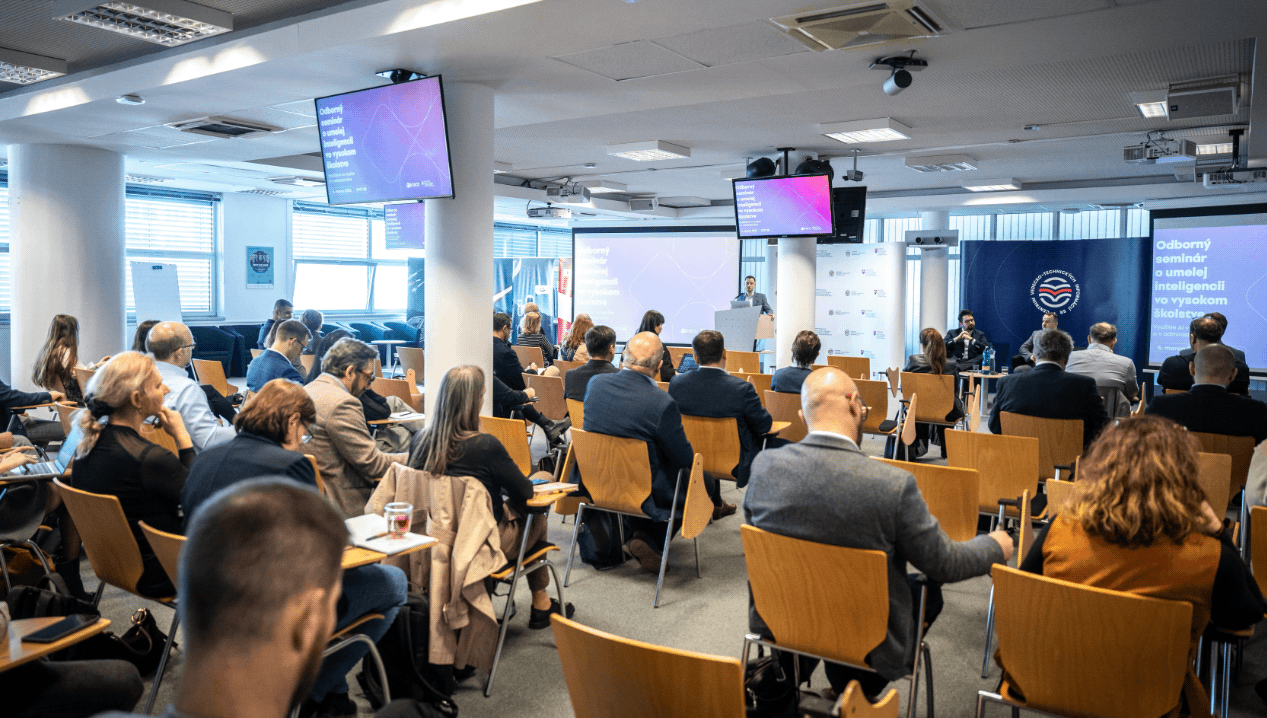
Slovak universities are looking for ways to use AI in higher education systematically, ethically and in ways that strengthen the quality of learning. An expert seminar in Bratislava therefore opened a broader discussion about how artificial intelligence can support both students and teachers, and which rules should guide its use in academic environments.
Today, AI tools for universities already plays a significant role. Recent surveys show that 88% of students, 74% of doctoral candidates and around 60% of academic staff use AI tools on a daily basis. As a result, universities increasingly seek ways to turn this trend into structured support for teaching and learning.
For a successful digital transformation of higher education, universities must strengthen digital and AI competencies among both students and staff. At the same time, institutions need clear ethical guidelines that define how these technologies should be used in academic settings.
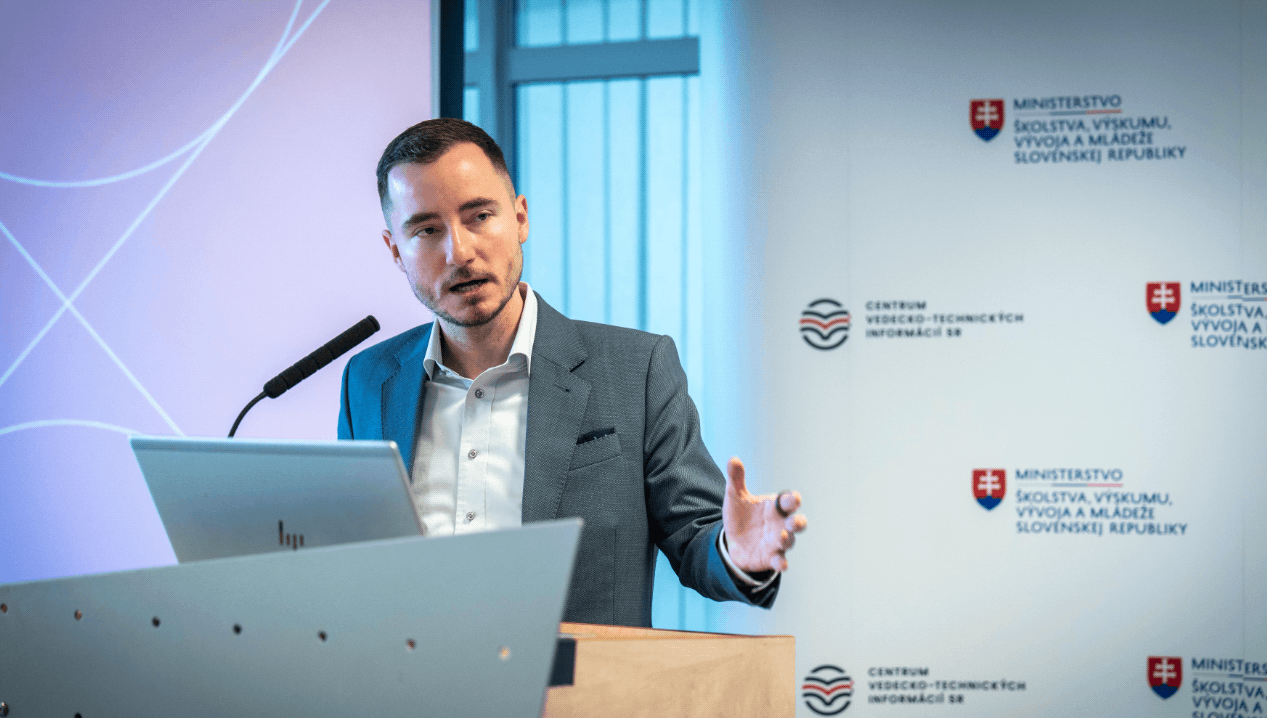
“At the beginning of this year, we launched a pilot project providing 20,000 ChatGPT Edu licenses for students in teacher training programmes and for faculty members who teach them. At the same time, we support the creation of specialised AI competence centres at the Slovak University of Technology in Bratislava and the Technical University of Košice,” said Minister of Education Tomáš Drucker.
Universities, government and experts join the discussion
Representatives of universities, the Ministry of Education, the OECD and international experts discussed both the opportunities and risks connected with AI in higher education during the expert seminar held at the Slovak Centre of Scientific and Technical Information in Bratislava.
“Introducing artificial intelligence is not only a technological issue. It also requires changes in curricula, adjustments to university regulations and active risk management,” said State Secretary for Higher Education and Academic Research Róbert Zsembera.
The idea of creating a shared discussion platform for Slovak universities also attracted the attention of the OECD. Therefore, organisers invited AI experts from the University of Oxford, ETH Zurich and other international institutions to join the panel discussions. This exchange allowed Slovak universities to compare their experience with practical examples and best practices from abroad.
Universities already test their own AI tools
At the same time, several Slovak universities already present practical solutions that use the potential of artificial intelligence in everyday academic life.
For example, the Slovak University of Technology in Bratislava introduced AI Tutor, a tool that helps students prepare for exams through step-by-step guidance. In addition, the university develops a digital assistant called AI Avatar, which can communicate in 24 languages.
Similarly, the Technical University of Košice launched a university chatbot available around the clock. The chatbot connects directly to internal university systems and helps students find relevant information faster.
The Catholic University in Ružomberok also introduced an innovative approach. Its didactic arithmetic coach uses the principle of “scaffolding”, which guides students step by step while solving problems. As a result, future mathematics teachers develop stronger analytical thinking skills. Research also shows that this approach increases students’ confidence while reducing mathematical anxiety.
Supporting teachers will be crucial
The discussion also addressed how prepared teachers are to work with new technologies. According to recent surveys, up to 81% of university teachers learn about artificial intelligence primarily through self-study.
Therefore, universities will need to systematically develop digital and AI competencies among both students and academic staff in the coming years. Equally important, however, will be the introduction of clear ethical frameworks that guide the responsible use of AI in higher education.
News
Slovakia Expands Cooperation with OpenAI and NVIDIA, Universities Join Global AI Effort

The Ministry of Education introduces guidelines on AI and mental health